
TL;DR
- • Managers are the single biggest driver of engagement — not HR, not salary, not perks.
- • Most disengagement stems directly from avoidable management behaviours.
- • Communication failures, inconsistent feedback, and lack of recognition destroy morale.
- • The right behaviours can transform productivity, retention, and culture.
- • A practical checklist can help managers course-correct fast.
Introduction
Here's the uncomfortable truth: Employee engagement isn't an HR issue — it's a management behaviour issue.
In UK SMBs, people don't disengage because of weak mission statements or lacklustre perks. They disengage because of inconsistent managers, unclear expectations, and a chronic lack of meaningful feedback.
Most managers don't realise how much impact they have. But the data is brutal:
70% of engagement variation is driven directly by the manager.
Source: Gallup Research — and it's held true for a decade.
If your managers are inconsistent, unprepared, or unavailable, engagement collapses. And when engagement drops, so does performance, morale, and retention.
This article cuts through the fluff and breaks down exactly what UK SMBs get wrong, what great management behaviour actually looks like, and how to fix it.
The Challenges UK SMBs Face (The Real Ones, Not the HR Buzzwords)
1️⃣ Managers who communicate only when something goes wrong
Silence when things are going well. Feedback only when there's a problem. This creates teams who work in fear, not clarity.
2️⃣ Cancelled and rushed 1:1s
The fastest way for an employee to feel irrelevant is when their manager repeatedly cancels their only dedicated time to talk.
3️⃣ Zero recognition unless someone shouts loudest
Most SMBs reward visibility, not contribution. Quiet high performers quietly leave.
4️⃣ New managers with no training and no support
Promoting the best performer into management is a classic SMB mistake. Different skillset. Different mindset. Zero preparation.
5️⃣ High turnover because people leave managers, not companies
The recruitment cost alone is painful. The knowledge loss is even worse.
📥 Free Download: Onboarding Toolkit for UK SMBs
Set new managers and employees up for success from day one:
- ✅ 30/60/90 Day Onboarding Plan — Structured plan with goals, activities, check-ins, and success measures
- ✅ Manager Onboarding Checklist — Complete checklist covering pre-start, day one, first week, and 90-day activities
- ✅ New Starter Questionnaire — Structured feedback form for week 1, week 4, and week 12 check-ins
- ✅ Welcome Email Template — Professional email template ready to copy and paste into Outlook
📧 Instant access. No spam. Professional resources for UK businesses.
A Realistic (and Painfully Common) Scenario
📋 Picture a typical UK SMB marketing team.
The manager is swamped. Back-to-back meetings. Constant firefighting.
So what gets sacrificed?
1:1s. Feedback. Development. Recognition. Alignment.
Employees stop raising ideas because the manager is "too busy." Performance reviews feel like guesswork. Team culture flatlines. Turnover spikes.
And leadership wonders: "Why doesn't this team seem motivated?"
It's not motivation. It's management behaviour.
Common Management Mistakes (and Why They Hurt More Than Managers Realise)
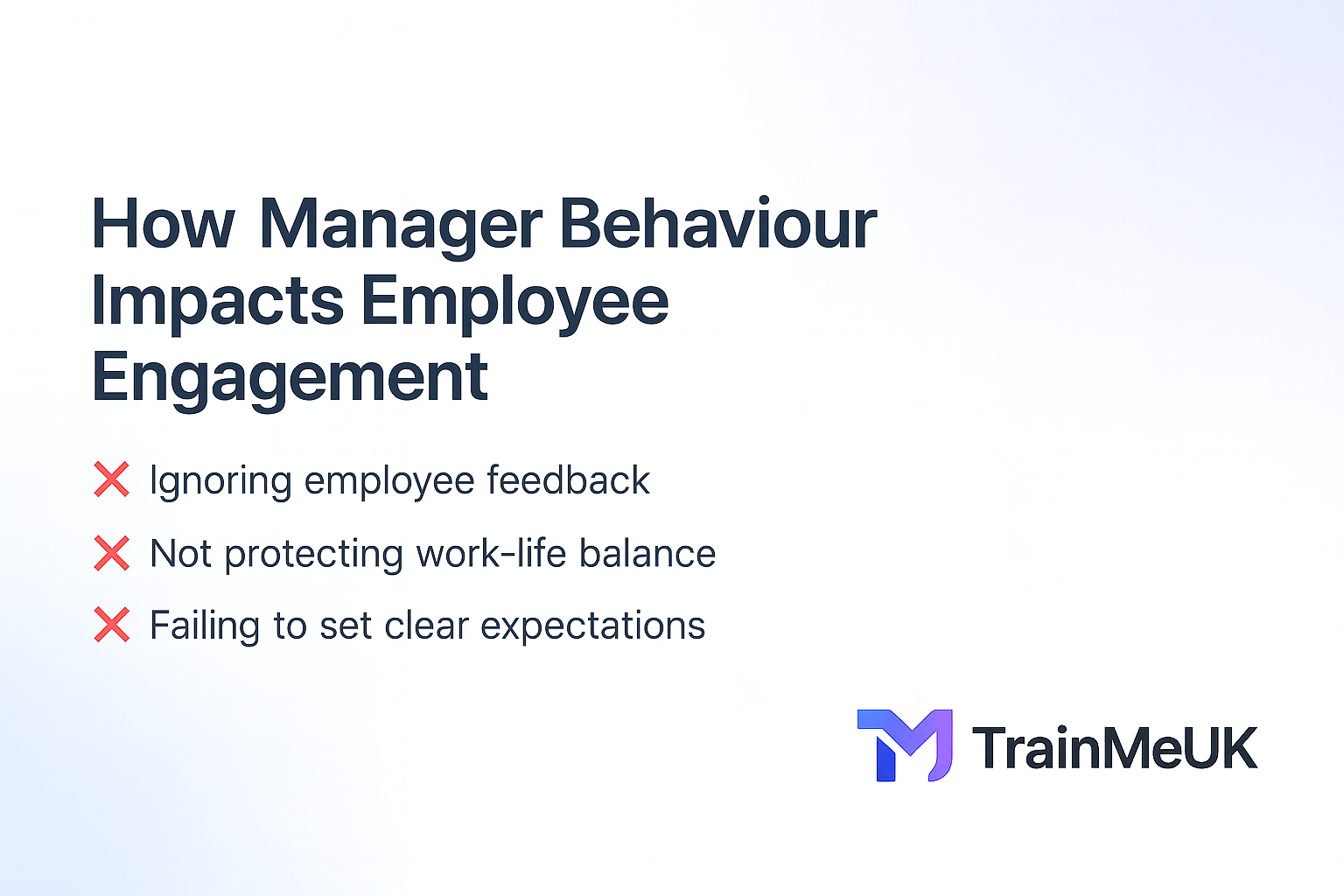
Ignoring employee feedback
When employees speak up and nothing changes, they stop speaking up. Silence isn't satisfaction — it's resignation.
Not protecting work-life balance
If the average employee feels constantly available, they eventually disconnect to protect themselves.
Failing to set clear expectations
Most performance issues in SMBs happen because the manager's version of "success" is inside their head — not written down or communicated.
Core Engagement Principles (The Non-Negotiables)
1. Open Communication
Tell your team what's happening. Explain the why behind decisions. And keep conversations two-way, not top-down.
2. Frequent, Structured Feedback
Not once a year. Not when something breaks. Every week. Short, direct, behavioural feedback that actually helps people grow.
3. Timely, Specific Recognition
A quick "well done" doesn't cut it. Great managers recognise behaviour, impact, and progress — not just outcomes.
What Great Management Behaviour Actually Looks Like
It's not charisma, confidence, or being extroverted. It's repeatable habits:
- ✓ Holding every 1:1 — not just when convenient
- ✓ Active listening — not waiting for your turn to speak
- ✓ Setting clear expectations in writing
- ✓ Giving constant micro-feedback so no one is surprised at review time
- ✓ Recognising effort and progress, not just results
- ✓ Creating psychological safety, where people can challenge or ask questions without fear
- ✓ Communicating direction regularly so people understand priorities
Great managers aren't born. They're trained. And they follow structure.
Quick Engagement Checklist
If you can't do these, engagement will tank.
If a manager does even 70% of this list consistently, engagement rises. If they don't, nothing else will fix the problem.
The Real Benefits for UK SMBs
When managers behave well:
🚀 Morale Increases
People feel valued and listened to.
🚀 Productivity Climbs
Engaged employees don't need pushing — they push themselves.
🚀 Turnover Drops
Managers stop being the reason people leave.
🚀 Teams Collaborate Better
Psychological safety boosts creativity and problem-solving.
🚀 The Entire Business Becomes More Resilient
Engagement compounds into retention, customer experience, and output.
Tools That Support Better Management
If you want your managers to improve, give them tools that support the behaviours you want:
Platforms that capture employee feedback
Tools that structure communication and check-ins
Recognition features that build culture
Training systems that develop new managers properly
Manager dashboards that provide instant visibility into team training compliance, like our Manager Dashboard, help managers stay accountable and engaged with their team's development.
Because here's the truth: Managers don't improve by accident. They improve with structure.
Related Reading
Staying Audit-Ready All Year
How UK SMBs can maintain compliance readiness without extra admin burden.
Read More →Top 5 Compliance Failures
Learn the most common compliance training mistakes that SMBs make.
Read More →Hidden Costs of Manual Training
Discover the hidden costs of managing training manually.
Read More →Frequently Asked Questions
How much do managers impact employee engagement?
According to Gallup research, 70% of engagement variation is driven directly by the manager. This means managers have more influence on engagement than HR policies, salary, or perks combined.
What are the most common management mistakes that hurt engagement?
The most common mistakes include: communicating only when something goes wrong, cancelling 1:1 meetings, failing to recognise contributions, promoting top performers into management without training, and not setting clear expectations. These behaviours create disengagement and increase turnover.
Why do employees leave managers, not companies?
Employees leave managers because daily interactions with their direct manager have the biggest impact on their work experience. Poor communication, lack of recognition, unclear expectations, and cancelled 1:1s make employees feel undervalued and invisible, leading them to seek better management elsewhere.
What does great management behaviour look like?
Great management behaviour includes: holding every 1:1 meeting consistently, active listening, setting clear expectations in writing, giving constant micro-feedback, recognising effort and progress, creating psychological safety, and communicating direction regularly. These are repeatable habits that can be trained.
How can UK SMBs improve manager behaviour?
UK SMBs can improve manager behaviour by providing proper training for new managers, using tools that structure communication and check-ins, implementing recognition systems, and creating accountability for management behaviours. Managers improve with structure, not by accident.
Conclusion
Most SMBs don't have the luxury of full HR teams or leadership coaches. They rely on managers to lead, motivate, develop, and engage — but rarely give them training or tools that make that possible.
At TrainMeUK, we make development simple. Training, compliance, onboarding, management development — all in one place. No complexity. No admin burden. No excuses.
You can set up TrainMeUK in under a day and give your managers the structure they need to build engaged, high-performing teams — all year round.