

Daniel Hyatt
TrainMeUK Founder
TL;DR
- Social engineering = manipulating people into giving up data or access — not hacking systems.
- Two-thirds of UK cyber breach exposure is concentrated in social engineering vectors (phishing and impersonation), according to the DSIT/Home Office Cyber Security Breaches Survey 2025.
- UK GDPR Article 32 and Cyber Essentials both require staff awareness training that covers social engineering — see our cyber security training requirements guide.
- The ICO can fine up to £17.5 million or 4% of global annual turnover for breaches where inadequate training contributed.
- HR should own it — not IT. Employees are the attack surface, not servers.
- Completion tracking is the compliance headache. An LMS solves it automatically, without spreadsheets.
What is social engineering? (And why it's not just an IT problem)
Social engineering is the manipulation of human psychology to bypass security controls. Attackers do not need to crack a password or exploit a software vulnerability. They just need one employee to trust them.
The attack surface is not your servers. It is your people.
That is why this is fundamentally an HR and people-risk issue — not an IT one. IT can patch software. It cannot patch a member of staff who hands over login credentials to someone posing as the helpdesk.
The most common vector is email-based deception — covered in our dedicated guide to phishing awareness training for employees — but it is far from the only one. Attackers exploit trust, urgency and authority. They impersonate colleagues, suppliers, banks and government bodies. They call your finance team. They walk through your front door.
The NCSC defines social engineering as "manipulating people into carrying out specific actions, or divulging information, that is of use to an attacker." Simple. And devastatingly effective.
The 6 social engineering attacks your employees will face
1. Phishing (email)
What it is: Fraudulent emails designed to trick recipients into clicking malicious links, downloading malware, or handing over credentials.
Real-world example: An email appearing to come from Microsoft 365 warns that your account will be suspended unless you verify your login — now.
Red flags: Urgency, mismatched sender domains (e.g. microsoft-support.net), requests to click links or enter credentials.
→ See our dedicated guide to phishing awareness training for employees.
2. Vishing (voice/phone calls)
What it is: Phone-based social engineering. Attackers impersonate IT support, HMRC, banks, or senior colleagues to extract information or authorise transfers.
Real-world example: A caller claims to be from your IT department and needs your password to fix an urgent system issue.
Red flags: Unsolicited calls asking for credentials, pressure to act immediately, refusal to let you call back on a verified number.
3. Smishing (SMS)
What it is: Phishing via text message. Often impersonates delivery companies, banks, or government services.
Real-world example: "Your HMRC tax refund of £312 is ready. Click here to claim." The link harvests banking details.
Red flags: Unexpected texts with links, requests for personal or financial information, shortened URLs.
4. Pretexting (fabricated scenarios)
What it is: The attacker creates a believable backstory to manipulate the target. Common personas include fake IT support, fake HR, or fake auditors.
Real-world example: Someone emails your payroll team claiming to be a new employee asking to update their bank details before their first payday.
Red flags: Requests that bypass normal process, new contacts asking for sensitive changes, pressure to act without verification.
Executive impersonation — CEO fraud and business email compromise — is the highest-impact form of pretexting. → See our dedicated guide to CEO fraud and business email compromise.
5. Baiting (USB drops, fake downloads)
What it is: Leaving infected USB drives in car parks or common areas, or offering fake software downloads. Curiosity does the rest.
Real-world example: A USB stick labelled "Salary Review 2026 — Confidential" is left in your office reception. An employee plugs it in.
Red flags: Found USB devices, unsolicited software offers, too-good-to-be-true downloads.
6. Tailgating / piggybacking (physical access)
What it is: An unauthorised person follows an employee through a secure door, exploiting politeness or distraction.
Real-world example: During a red team exercise, a tester posed as an employee on a phone call and tailgated through a side entrance — when challenged, a confident demeanour and a fake pass secured access to the building.
Red flags: Unfamiliar faces without visible passes, people who avoid the entry system, anyone who asks you to hold the door.
Physical access overlaps with digital risk — see our guide to workplace security training and staff awareness.
Why social engineering training is a legal requirement in the UK
This is not optional. Three separate frameworks make staff awareness training — including social engineering — a compliance obligation for UK businesses.
UK GDPR Article 32
Article 32 requires organisations to implement "appropriate technical and organisational measures" to protect personal data. Staff training is an organisational measure. The ICO's guidance is explicit: if staff go untrained and a breach occurs, that is a compliance failure — not just bad luck.
The ICO expects organisations to deliver induction training to all staff before they access personal data, and to ensure refresher training happens at appropriate intervals. Critically, if staff do not complete training and there is no evidence it was tracked, you are in breach of Articles 5(1)(f) and 32. See why GDPR training is legally required for the full picture.
Our take — Daniel Hyatt, Founder, TrainMeUK
Most UK SMBs we speak to genuinely believe their staff "know about phishing." They do not have a training programme — they have a vague awareness. That is not the same thing, and an ICO investigator will see straight through it.
One social engineering incident, one breach notification, and suddenly you are being asked for training records you do not have. The businesses that weather enforcement best are not the ones with the fanciest firewalls — they are the ones who can show dated, individual completion records for every person who touched personal data. That is why we built TrainMeUK around assignment and evidence first.
ICO enforcement
The ICO routinely asks for proof of when and how staff were trained, what was covered, and how completion was monitored. If a social engineering attack causes a breach and you cannot evidence training, you are exposed. Fines reach up to £17.5 million or 4% of global annual turnover, whichever is higher. Read real ICO cases where training failures mattered.
When social engineering succeeds, the consequence is often a reportable personal data breach — staff need dedicated data breach training for employees covering recognition, escalation, and the 72-hour clock.
Cyber Essentials
Cyber Essentials is the UK Government's minimum standard of cyber security for organisations of all sizes. While its five technical controls focus on firewalls, access controls and malware protection, staff awareness training is expected as part of a holistic security posture — and Cyber Essentials Plus assessors will probe it. See our ISO 27001 & Cyber Essentials training guide.
NCSC 10 Steps to Cyber Security
The NCSC's 10 Steps framework dedicates an entire step to staff engagement and training. It explicitly states that people can be "one of your most effective resources in preventing incidents" — provided they are properly trained. The NCSC also notes that training should be delivered in small, frequent chunks rather than a single annual session.
ISO 27001 Annex A.6.3
For organisations pursuing ISO 27001 certification, Annex A.6.3 requires a formal programme of information security awareness, education and training. Social engineering recognition is a core component.
What good social engineering training actually covers
Not all training is equal. A 10-minute video watched once in 2022 will not satisfy an ICO auditor — and it will not protect your team either.
Effective social engineering awareness training covers:
- Attack type recognition: the six types above, with real examples your team will recognise
- Verification procedures: how to confirm someone's identity before acting on a request (call back on a known number, check with a manager, use internal ticketing systems)
- Reporting playbook: what to do when you suspect an attack — who to tell, how quickly, and what not to do in the meantime
- Role-specific risk: finance, HR and exec staff face higher-risk attacks (pretexting, whaling) and need deeper training than general staff
Format matters. Online modules work well for UK SMBs — they are accessible across locations, trackable and repeatable. The NCSC's own guidance recommends a range of delivery methods, from online courses to simulated attacks, to improve retention.
Refresher cadence:
- All staff: at minimum annually — align with your GDPR refresher schedule
- Finance, HR and exec roles: every 6 months
- New starters: before or immediately upon starting (ICO requirement)
Without reinforcement, knowledge fades fast — the Ebbinghaus forgetting curve applies to security awareness just as it does to any other training. Spreading refreshers across the year — rather than one annual cram session — is what the spacing effect research supports. Generic once-a-year modules, meanwhile, rarely change simulation failure rates — see why traditional compliance training doesn't change behaviour.
The compliance headache: tracking who's done what
Here is the real problem for HR teams at UK SMBs. It is not finding the training. It is proving it happened.
Staff do not complete courses. HR has no visibility. Auditors ask for records that do not exist.
Sound familiar?
The ICO expects organisations to keep copies of training materials on record, along with details of who received the training and when. It also expects organisations to monitor completion and follow up with staff who have not done it. That is a significant admin burden — especially when you are managing 30, 50 or 100+ employees across departments.
Spreadsheets break down fast. At 20+ employees, manual tracking becomes unreliable. People leave. New starters slip through. Refresher deadlines pass unnoticed. See what UK auditors look for in training records.
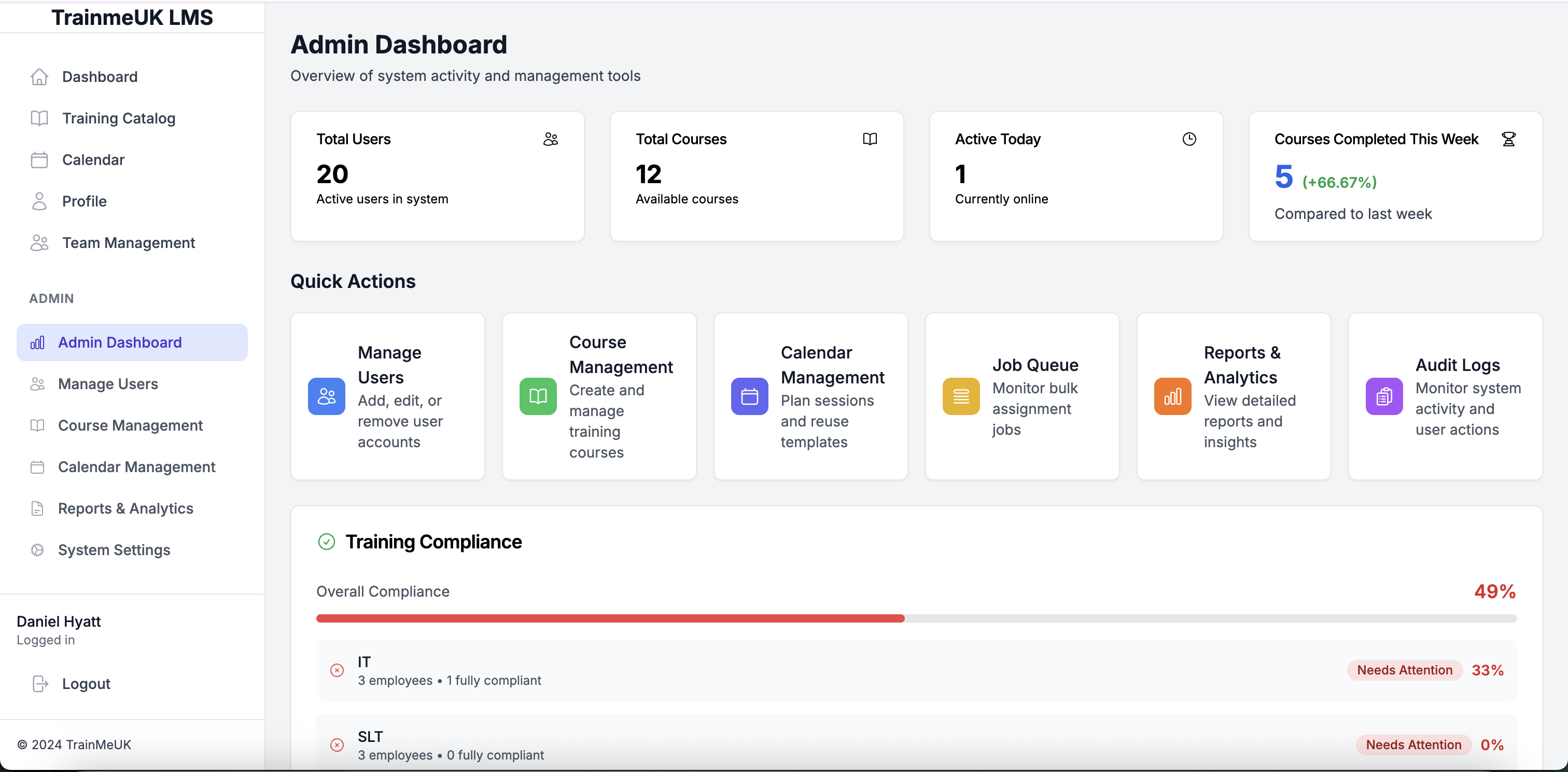
An LMS (Learning Management System) solves this automatically:
- ✅ Assigns training to new starters on day one
- ✅ Sends automated reminders for incomplete or overdue training
- ✅ Maintains permanent, auditor-ready completion records
- ✅ Generates instant compliance reports by department or role
- ✅ Flags upcoming renewal deadlines before they are missed
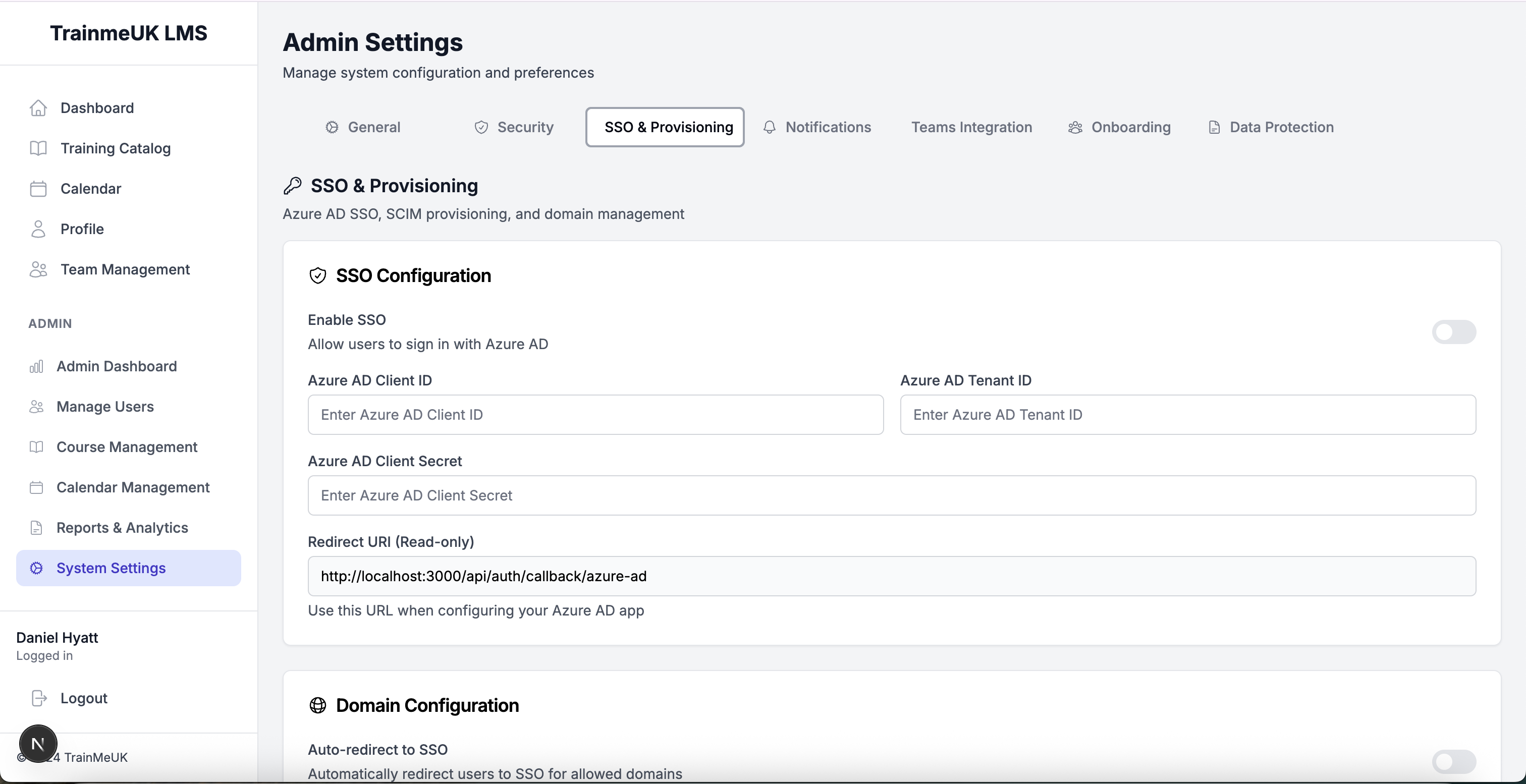
Azure AD integration takes this further. New starters are auto-enrolled in social engineering and cyber security training the moment they are added to your directory — no manual setup, no HR chasing IT.
TrainMeUK customers typically save 5–10 hours per month on training admin alone. That is time back for HR to focus on people, not paperwork.
Ready to see it in action?
Explore our cyber security awareness course and phishing awareness course — both include full LMS tracking and audit-ready reporting.
Every completion is logged, timestamped and exportable for ICO or Cyber Essentials assessments.
How to roll out social engineering training across your UK team
A step-by-step implementation guide for HR managers and compliance leads:
1. Map your risk profile
Which roles handle sensitive data, finances, or customer access? Finance, HR, operations and exec teams are highest risk. Identify them first. Use our mandatory training requirements checklist as a baseline.
2. Choose your training format
Online modules are the practical choice for SMBs — accessible from any device, completable in short sessions, and fully trackable. No room bookings, no scheduling headaches.
3. Set your baseline
Run an initial assessment or phishing simulation to understand your team's current awareness level. You cannot improve what you have not measured.
4. Assign training via your LMS
Use Azure AD integration to auto-enrol new starters on day one. Existing staff get assigned immediately. No manual setup required.
5. Track completion and generate audit-ready reports
Your LMS dashboard shows exactly who has completed training, who is overdue, and when renewals are due. One click for a compliance report.
6. Schedule refreshers
Annually for all staff as a minimum. Every 6 months for finance, HR and exec roles — these are the people attackers target most.
7. Brief your leadership
Senior staff are prime targets for whaling attacks — highly targeted social engineering that impersonates regulators, legal firms or board members. See our dedicated guide to CEO fraud training for wire transfer, payroll diversion and data harvesting scenarios. Leadership buy-in also sets the tone for the rest of the organisation. If the CEO skips training, everyone notices.
Expert insights
Three questions we hear from HR and compliance leads running social engineering programmes at UK SMBs.
What's the most common social engineering mistake UK SMBs make — and why does it keep happening?
Treating awareness as a one-off tick-box instead of a managed programme. Someone runs a generic video at induction, nobody tracks refreshers, and leadership assumes "we covered cyber in onboarding." Attackers know that pattern. The fix is not more fear — it is assignment rules, renewal dates and completion evidence that survive staff turnover.
Have you seen ICO investigations where having training records made a measurable difference to the outcome?
Yes. Organisations that can produce dated, individual completion records — what was covered, when, and who missed it — demonstrate accountability even when a breach still occurs. Those without records often face harsher enforcement because the ICO cannot see deliberate risk management. Training records do not prevent every incident, but they change how regulators assess your culture.
In a 50-person company, should HR or IT own social engineering training — and how do you split accountability?
HR should own the programme: assignment, completion, renewals and audit evidence. IT owns technical controls — MFA, email filtering, reporting mailboxes. The split fails when IT runs training in a silo with no HR visibility, or when HR buys content but cannot prove who completed it. One LMS with Azure AD sync gives both teams a shared source of truth without weekly spreadsheet chases.
FAQ: Social Engineering Training UK
Common questions about social engineering awareness training for UK employers.
Is social engineering training a legal requirement in the UK?
How often should employees receive social engineering training?
What's the difference between phishing training and social engineering training?
Can online training count as social engineering awareness training for Cyber Essentials?
How do I prove social engineering training compliance to an auditor?
Useful sources
- ICO: Training and awareness guidance (UK GDPR)
- ICO: A guide to data security (Article 32)
- NCSC: Engagement and training — 10 Steps to Cyber Security
- NCSC: Free cyber security training for staff (Top Tips for Staff)
- NCSC: Cyber Essentials overview
- UK Government: Cyber Security Breaches Survey 2025
- NCSC: The near-term impact of AI on the cyber threat
Ready to automate social engineering training?
Book a live walkthrough and see how TrainMeUK assigns, tracks and renews training automatically across your organisation — or start a free trial and have your first course live today.